Blockhouse Point doesn’t look like much today — a quiet point of land on North Hero, closed to the public, with a road named after it and not much else. But in the summer of 1781, a former Green Mountain Boy who had switched sides built a small British post here, and it became a base for the secret talks that tempted Vermont to rejoin the British Empire. The British stayed on long after the Revolution was supposed to be over, holding the post until 1796.
Key Takeaways
- From 1777 to 1791, Vermont was its own independent republic — not yet part of the United States, and bordering British Canada.
- Justus Sherwood, once a member of Ethan Allen’s Green Mountain Boys, defected to the British. In 1781 General Frederick Haldimand put him in charge of the northern division of the British secret service on the Lake Champlain frontier.
- Sherwood and about 25 men built the Loyal Block House in the summer of 1781 at a place then called Dutchman’s Point, now Blockhouse Point, on North Hero.
- The British held the blockhouse after the war ended in 1783 and even after Vermont became the 14th state in March 1791. They did not give it up until 1796.
- In June 1791, Thomas Jefferson, then Secretary of State, reported to President Washington on a dispute over a British customs vessel sent to the blockhouse.
A Republic on the Edge of a War
Most people picture the American Revolution as a clean fight between two sides. Vermont’s version was messier. From 1777 until it joined the United States in 1791, Vermont wasn’t a colony, and it wasn’t yet a state — it was its own independent republic, wedged between British Canada to the north and a new United States that hadn’t decided whether to recognize it. That uncertain, in-between status made the Champlain Islands, sitting right on the water route into Canada, a natural place for spies.
From Green Mountain Boy to British Spy
Justus Sherwood started the war on the American side. He was one of Ethan Allen’s Green Mountain Boys, the ragtag militia famous for seizing Fort Ticonderoga in 1775. But when the Revolution broke out in earnest, Sherwood chose the other side. He fled north into British-held Canada and became a captain in the Queen’s Loyal Rangers. In 1781, Haldimand, the British governor of Canada, appointed him to run the secret service on the northern Lake Champlain frontier — effectively putting a former Vermonter in charge of British spying on his old neighbors.
The Loyal Block House
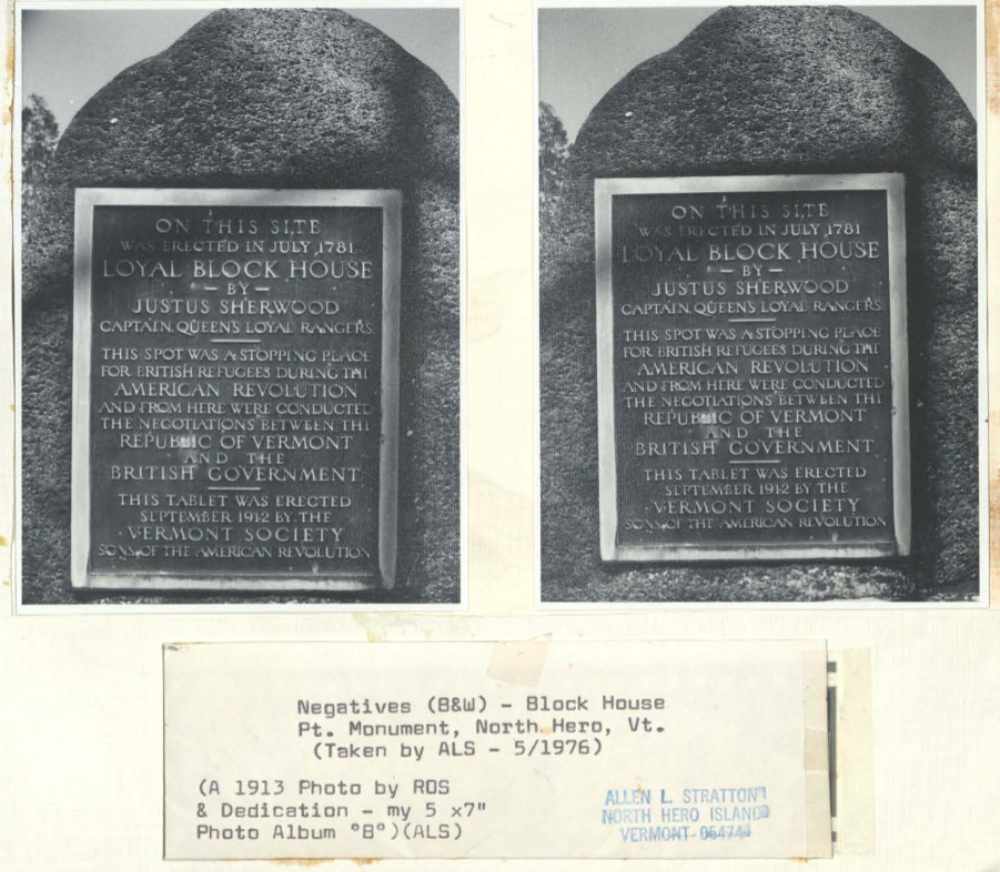
In the summer of 1781, Sherwood and about 25 men built a wooden blockhouse on a point of North Hero then known as Dutchman’s Point. Known as the Loyal Block House, and sometimes as Fort Loyal, it stood near the north end of Lake Champlain, the most likely route for any American invasion of Canada. Historians describe it as a small advance post rather than a major fortress. Its value lay in what it allowed the British to do: gather intelligence, watch traffic on the lake, and serve as a contact point for secret talks.
Those talks were the Haldimand Negotiations (1780–1783). The British hoped to coax Vermont away from the American cause and back into the British Empire, perhaps as a separate province. Sherwood was Haldimand’s principal negotiator. His Vermont counterparts were the Allen brothers — Ethan, and especially his younger brother Ira, who handled much of the detailed bargaining.
Many historians believe Vermont’s leaders used the talks as leverage. Keeping the British interested helped hold off attack, and the unofficial truce along the northern frontier gave the Continental Congress reason to worry, which may have helped Vermont’s push for recognition. In the end, Sherwood never brought Vermont back into the British fold. The effort faded as the war wound down.
Still There After the War Ended
Here’s the part of the story that tends to surprise people: when the Treaty of Paris ended the Revolutionary War in 1783, the British did not leave Dutchman’s Point. They also kept Point au Fer, a few miles north on the New York side, along with other frontier posts farther west. Britain’s refusal to withdraw is generally tied to disputes over the treaty’s terms, including unpaid prewar debts and the treatment of Loyalists. The blockhouse stayed in British hands through the rest of Vermont’s time as an independent republic and after it became the 14th state in March 1791.
The friction was still real that summer. Thomas Jefferson, then Secretary of State, was traveling through the region with James Madison. Writing to President Washington from Bennington on June 5, 1791, he reported on a dispute near the blockhouse. A British customs vessel, the Maria, normally stationed at Point au Fer, had been sent to the blockhouse and was stopping boats traveling to and from Canada, well inside Vermont’s boundary. Local settlers complained, and the vessel was recalled. Jefferson added that he had heard the British might have withdrawn their guard from the blockhouse, but he said the report was not reliable enough to believe fully.
The British finally gave up Dutchman’s Point and Point au Fer in 1796, after Jay’s Treaty, ratified by the Senate in 1795, took effect.
What’s There Today
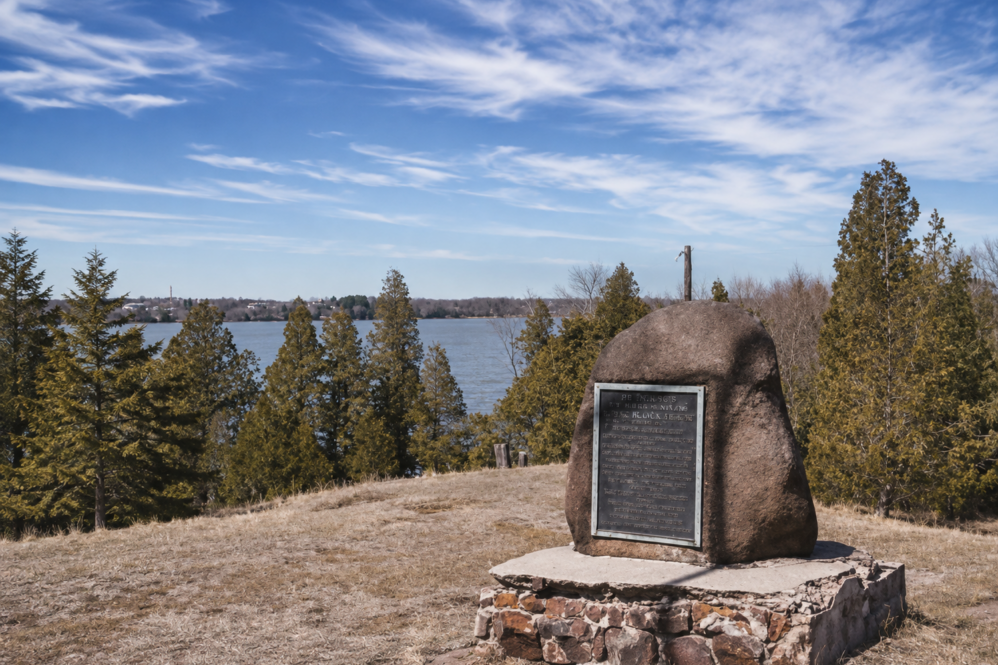
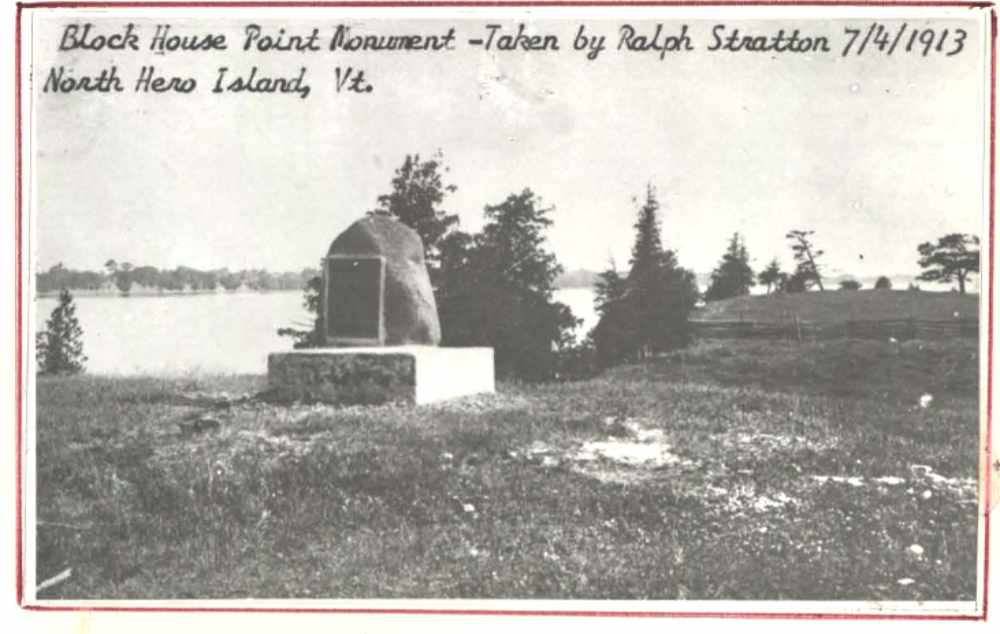
The Loyal Block House itself is long gone, and the site on Blockhouse Point is now private property, closed to visitors. But the name lives on in Blockhouse Point Road, and the story is preserved by the Vermont Historical Society, which produced a segment on the site with Local 22 & Local 44 as part of their This Place in History series. A monument placed in 1912 by the Vermont Sons of the American Revolution commemorated the site, and a replica of the blockhouse was built there around 1953. If you want to learn more about North Hero’s history up close, the North Hero Historical Society’s museum on Route 2 is a good place to start.
Frequently Asked Questions
Who was Justus Sherwood? A Green Mountain Boy who sided with the British during the American Revolution and became a captain in the Queen’s Loyal Rangers. In 1781 he was put in charge of British secret-service work on the northern Lake Champlain frontier. He built and ran the Loyal Block House on North Hero and served as Haldimand’s principal negotiator with Vermont.
What was the Loyal Block House? A small wooden British fortification built in the summer of 1781 at Dutchman’s Point (now Blockhouse Point) on North Hero. It was a base for intelligence work and a contact point during the Haldimand Negotiations with Vermont’s leaders.
Why did the blockhouse stay active after the war? Britain kept the blockhouse, along with other northern posts, for years after the Treaty of Paris, generally tied to disputes over prewar debts and Loyalist claims. It was surrendered only in 1796, after Jay’s Treaty took effect.
Can you visit Blockhouse Point today? No — the site is now private property and closed to the public. The North Hero Historical Society museum on Route 2 is the best place to learn more about the area’s Revolutionary-era history.
Sources: Vermont Historical Society, “This Place in History: Blockhouse Point,” in partnership with Local 22 & Local 44 (mychamplainvalley.com); Vermont Historical Society, “The British Secret Service in the Champlain Valley During the Haldimand Negotiations, 1780–1783”; Thomas Jefferson to George Washington, June 5, 1791, Founders Online, National Archives; Vermont History, “Jay’s Treaty: The Transformation of Lake Champlain Commerce” (Vol. 80, No. 1); Digital Vermont, Vermont Historical Society photograph records.