Some Places Die So Completely, Even the Forest Won't Forget
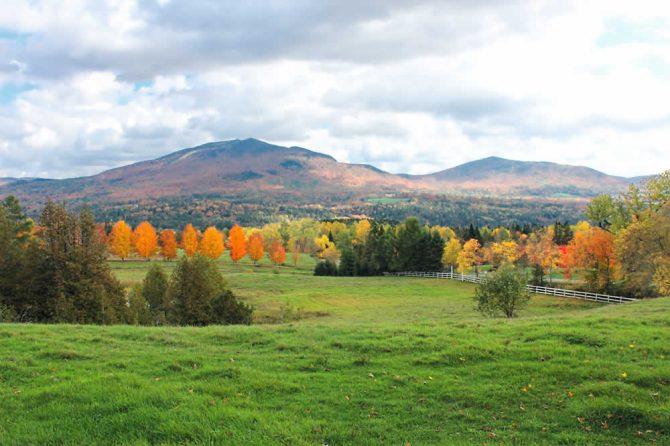
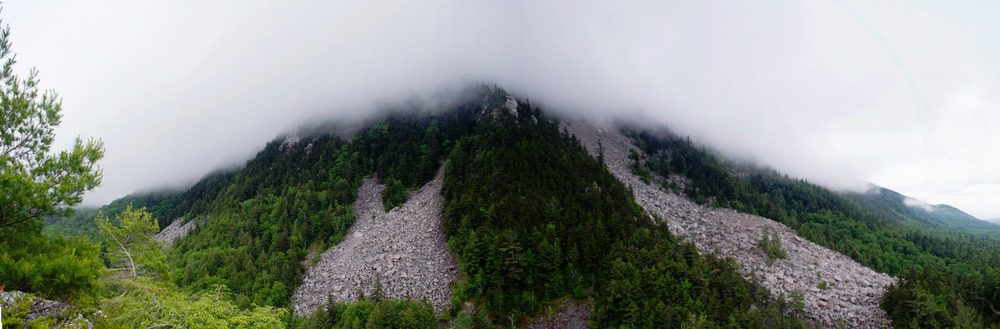
In the high country above Wallingford, where the Green Mountains keep their oldest secrets, there exists a place where the forest grows too thick and the shadows linger too long.
The hikers who pass through on the Long Trail—those seekers of Vermont's wild spine—rarely pause here. Something in the air whispers move along. The swamp at its center holds water the color of old bruises, and dead trees claw upward like fingers frozen mid-grasp.
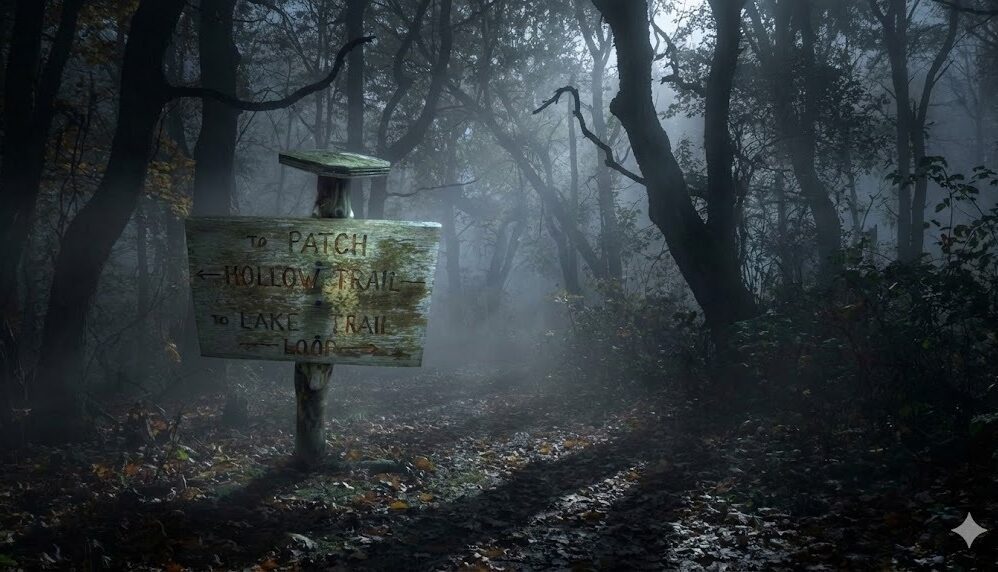
They call it Patch Hollow
No one lives there now. No one has, not for nearly two centuries. But once, five families made their homes in this mountain trench, where Bear Mountain's steep flank casts its shadow and Button Hill rises gentle to the east. Once, smoke curled from chimneys. Once, children's voices echoed between the ridgelines.
And then came the night when blood soaked the floorboards, and Patch Hollow learned what happens when rage wears a human face.
The Old Roads Remember
Here is what the history books won't tell you: mountains remember.
In Vermont's early days, settlers built their roads through the highlands rather than the flood-prone valleys below. Patch Hollow sat astride one such thoroughfare, a necessary passage through the Green Mountain wilderness. Civilization perched precariously on these heights, defying the pull of gravity and good sense.
But civilization, as it turned out, was the thinnest of veneers.
The year was 1831. Spring had come late to the mountains, as it always does. In a cabin tucked within the hollow lived a man named Rolon Wheeler—a name that would soon be whispered with the kind of horror reserved for wolves and winter storms.
- There's more to Vermont than maple syrup and covered bridges
- A book about Vermont's history will likely bring to mind such topics as Abenaki Indians, the Green Mountain Boys and the state's famed covered bridges, but Forgotten Tales of Vermont takes readers far beyond traditional histories to uncover little-known stories from Vermont's quirky past
- Who knew that students from Castleton Medical School moonlighted as grave robbers until they were caught hiding Mrs
- Churchill's head in a haystack? Or that an Egyptian mummy once turned up in Middlebury and is now buried at the local cemetery alongside the town's founders? Stories such as the Willoughby Lake “monster” and “Slipperyskin,” the bear that terrorized Lemington, are sure to bemuse, baffle and surprise even Vermonters who think they've heard it all
- Culled from newspapers, books and journals, William M

What the Darkness Knows
Wheeler was, by all accounts, a man of violent temperament and jealous mind. The scandal that destroyed him was intimate, familial, unforgivable: relations with his wife's sister. When word spread through Wallingford and neighboring Shrewsbury, it moved like wildfire through dry autumn leaves.
Rage is a curious thing. It feeds on itself, grows fat on whispers and rum, transforms ordinary men into something ancient and terrible. By May, the talk had curdled into action. Two mobs formed independently—one in Wallingford, one in Shrewsbury—both with the same medieval purpose: tar and feather the sinner.
They gathered their instruments of humiliation: buckets of tar, black and sticky. Sacks of feathers. Jugs of rum to steel their courage. Under the spring darkness, they began their march into the mountains.
One group never arrived. The Shrewsbury men lost themselves in the forest's embrace, wandering until embarrassment overcame bloodlust. They slunk home, defeated by shadows and their own poor navigation.
But the Wallingford mob?
They found what they were looking for.
What Happened in the Dark
Imagine it: May 11th, deep night, the cabin door barred from within. Wheeler had been warned. He'd fashioned a blade from a file, crude but sharp enough. He waited in the darkness, listening to the sounds of men approaching, their voices thick with drink and purpose.
The door held. So they went over—prying at the gable end, tearing at the roof itself until three men could drop through into the blackness below.
What followed was chaos written in blood.
Bodies collided in the dark. Wheeler's homemade knife found flesh—once in a man's side, then again and again, fourteen slashing wounds across another. Screaming. The metallic scent of blood. Someone unbarred the door and more men poured in like a flood.
In the confusion, in the terrible darkness, a man fell dead.
When they finally struck light and looked upon their work, the mob saw not Wheeler's body, but their own: Isaac Osborne, friend and fellow vigilante, murdered by mistake in the frenzied dark.
And Wheeler? Gone.

- EVERY STORY HAS A STORY!Vermont-based novelist and horror historian Joseph Citro has been terrifying readers for over thirty years
- Now, he’s taken a bold step into new territory with this one-of-a-kind blend of fiction and memoir
- Following each elegant nightmare, the author reveals its real-life inspiration
- Some are as horrific as the stories they inspired!Meet some of the cast:Darren, whose grandfather harbors a terrifying secret!Jason, who was damned before he died!Terry, a boy with the most mysterious playmate of all!Carl, whose vision of Hell is all too real!And if you dare, meet the rest of the denizens of Citro’s weirdly wonderful world
- This collection includes Citro's first published short story, his first professional sale, and his farewell to short fiction
The Escape
The clever ones always escape, don't they?
While men grappled and stabbed in the darkness, Wheeler had torn free of his clothing—leaving his attackers fighting empty cloth. He'd dropped to the floor, wormed beneath his bed, pried up floorboards with strength born of pure survival instinct, and disappeared through the crawlspace beneath his own home.
Picture him: naked, bleeding, listening from below as his attackers realized their mistake. Feeling the floor shake with their panicked footsteps as they fled into the night.
Dr. John Fox of Wallingford arrived later to examine the scene. He would say, years afterward, that it remained the most terrible sight of his life: Osborne's pallid corpse sprawled across the bed, blood saturating every surface, visible only by candlelight's flickering revelation.
Wheeler spent that night in the forest, unclothed, listening to the mountain darkness. At dawn, he stole a shirt from a clothesline. He walked to Hartsboro—itself now vanished from maps—and hid in a barn where he wove a crude garment from rye straw. Eventually, he reached his sister's home in Pawlet.
They caught him anyway.
Justice, After a Fashion
The trial convened in Wallingford's Baptist Church, the only structure large enough for the crowds who came to witness judgment. They packed the pews where prayers should echo, hungry for resolution to a story that had no good ending.
Wheeler was acquitted. Self-defense, the makeshift court declared. A man has a right to protect his home, even from righteous anger.
The mob fared less well. Fines were levied: sixty dollars for two men, forty for three others. Not enough to resurrect Isaac Osborne. Not enough to wash the blood from Patch Hollow's soil.
The Abandonment
And then—this is the part that chills—Patch Hollow emptied.
Not immediately, but soon enough. The families packed their belongings and descended to the valleys. Perhaps they couldn't bear the weight of what had happened. Perhaps Wheeler's cabin stood as a monument to humanity's capacity for violence and error. Perhaps the hollow itself had been stained by that night, marked in ways invisible but undeniable.
Whatever the reason, no one returned. No one rebuilt. The forest reclaimed the clearings. The roads fell into disuse. Within a generation, Patch Hollow became what it remains today: wilderness, as if humans had never carved a life from its slopes.
In 2008, a beaver dam burst and sent a torrent of water crashing down the mountainside, carving a new gorge and strewing massive boulders across Route 140. Nature demonstrating, perhaps, that it remembers how to erase our marks.
What Remains
Walk the Long Trail through Patch Hollow today. Notice how quiet it is—quieter than wilderness should be. Notice the swamp with its skeletal trees. Notice how quickly you find yourself wanting to move along, to reach the next ridge, to put this place behind you.
There are no markers, no plaques, nothing to indicate that humans once lived and died here. The hollow keeps its secret well. Only those who seek the story will find it, buried in old books and fading accounts.
But the mountains remember. The mountains always remember.
And on certain spring nights, when the wind moves through the hollow just so, you might hear something that sounds almost like voices—raised in anger or terror or both—echoing between Bear Mountain and Button Hill, replaying a violence that ended a community and left only silence in its wake.
Listen.
The hollow is speaking still.
- Alexander, William M. (Author)
- English (Publication Language)
- 74 Pages – 08/26/2018 (Publication Date) – Independently published (Publisher)
Finding Patch Hollow
For those drawn to dark history and Vermont's hidden places, Patch Hollow lies along the Long Trail. Access it by hiking north from the Route 140 trailhead in Wallingford, or south from Clarendon Gorge off Route 103 in Shrewsbury.
Walk carefully. Watch where you step. If you would like to read more, check out Chad Abramovich's extensive article by clicking here.
Some ground remembers everything.
Thank you for visiting Vermonter.com! Please subscribe to our email list for the latest articles!