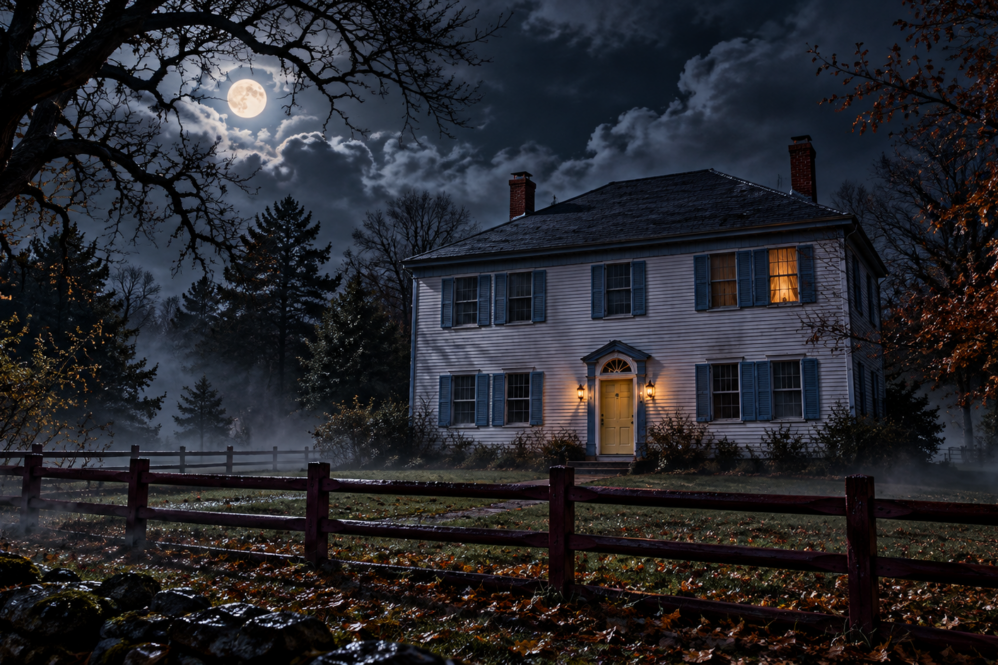
On the outskirts of Lyndon Corners, in Vermont’s Northeast Kingdom, stands a large white house with the balanced, formal lines of southern New England rather than the rambling look of a typical hill-country farmhouse. There is a reason for that. The family who raised it came north from Providence, Rhode Island, and they brought their taste in architecture with them.
The family was the Cahoons, and the man at the center of their story is Daniel Cahoon. A Providence merchant of some standing, he was among the original proprietors when Lyndon was chartered in 1781 and moved to the town himself in 1795. Local histories credit his son, Daniel Jr., with finishing the house around 1798. The younger man did not enjoy it for long. He died of tuberculosis at the age of 26, and his father took over the house and the farm.
Daniel Sr. went on to become a respected figure in town affairs. It was not his public service that made him a legend, however. It was the way he died.
The Barnyard
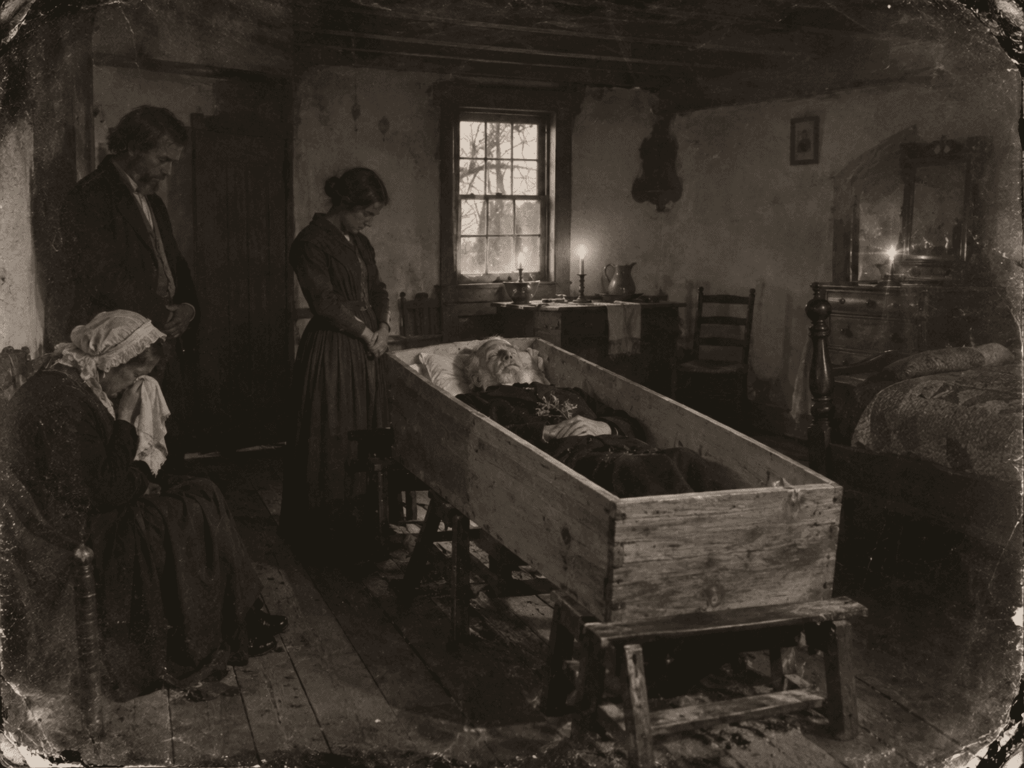
By most accounts, the year was 1811 and Daniel was about 74. He was crossing the barnyard when a bull charged. Several versions of the story say he stepped between the animal and a small child and paid for it with his life. Others are less heroic and have the old man simply in the wrong place at the wrong time. Either way, he was carried into an upstairs chamber and laid out there, as was the custom of the day. One account puts the crowd at his funeral at around 800 people, a remarkable turnout for a small frontier town.
The Missing Cellar
Here the story turns from history to folklore. Daniel, the tale goes, liked a drink, and the farm had plenty to offer. Some tellers say the family kept a cellar of wine. Others remember the farm’s distillery, where potatoes were turned into whiskey. Whichever version you hear, the ending is the same: after the funeral, Daniel’s grieving widow blamed the drink for her husband’s death and had the cellar walled up so it could never tempt another member of the family.
Nobody has ever found it. And, according to the legend, Daniel has been looking ever since.
The Sounds in the Night
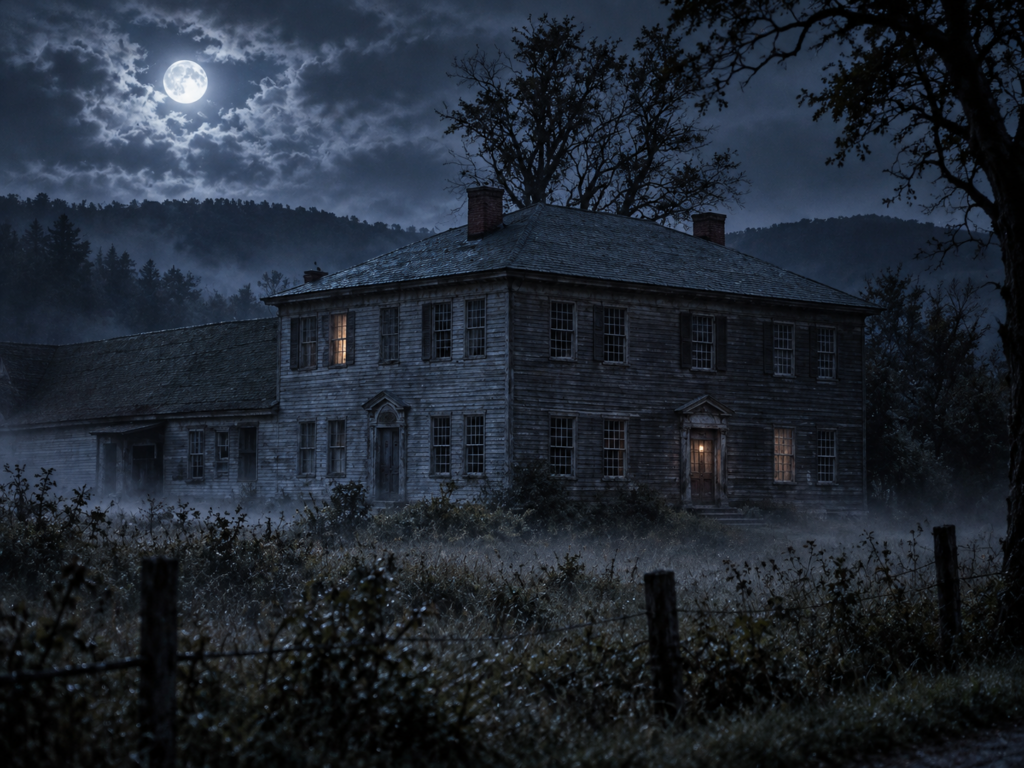
The reports that have gathered around the house over the decades are remarkably consistent. Residents and overnight guests have described footsteps climbing the front stairs and a door opening and closing when no one has come in. Some have felt blankets tugged slowly off the bed, as if a stranger were playing a quiet game of tug-of-war. Others have woken to the sound of faint music, murmured voices, a woman’s laugh, and the clink of glassware, along with the scent of old-fashioned snuff. One account tells of a young woman in an old-fashioned dress who stood at the foot of a sleeper’s bed in the small hours and then faded from view.
The upstairs chamber where Daniel was laid out has taken most of the attention. Family members have called it the haunted room, and some relatives refused to sleep there. Others who lived in the house for years insisted they never noticed a thing.
Skeptics and Settling Houses
It is fair to say that the house gives skeptics plenty to work with. A building that has stood for more than two hundred years groans in the wind and shifts with the seasons, and Vermont winters are hard on timber. Sounds carry strangely through big rooms with high ceilings. The parties and dances that once filled the house likely feed the idea of echoes from a livelier age. Some residents have taken the sounds in stride and treated them as one more feature of a very old home.
Still, the stories persist, and the legend of a restless old farmer searching for a lost cellar is hard to shake. Whether you believe in ghosts or not, the Cahoon house stands as a reminder of Lyndon’s earliest settlers and the tales they left behind.
A note for readers: the Cahoon farmhouse is a private home. Please admire it from the road and respect the privacy of the current owners who live there.

Sources consulted: Tom Slayton, “Farm Couple Takes Spooks in Stride,” Times Argus, October 31, 1980; Virginia Campbell Down, Mansions & Meadows, Lyndon Historical Society, 1991.
This page contains affiliate links. As an Amazon Associate I earn from qualifying purchases.