In the frigid early morning hours of February 5, 1887, at 2:10 a.m., the Montreal Express — a night train bound from Boston and Springfield, Massachusetts to Montreal — was crossing the 650-foot wooden trestle bridge over the White River, about four miles north of White River Junction. A rail beneath the train broke, likely weakened by the bitter cold (the temperature that night was reportedly 20 degrees below zero).
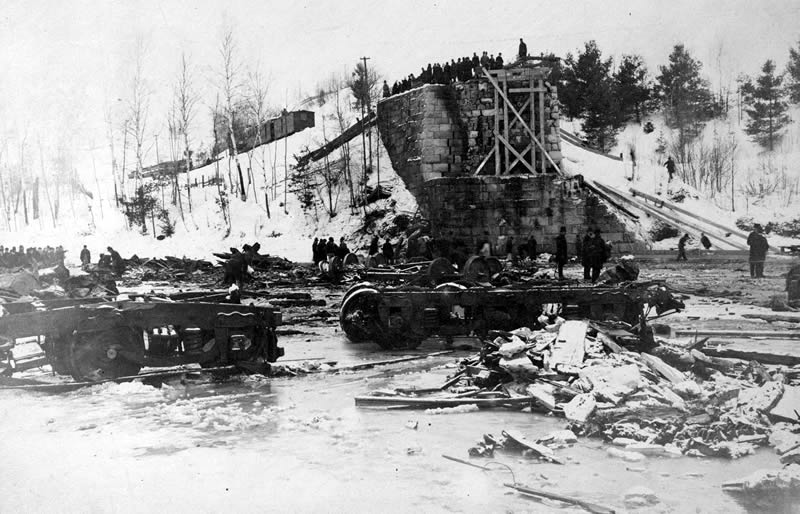
The rear four cars — two Pullman sleepers and two passenger coaches — derailed, snapped free from the front of the train, and plunged roughly 40 to 60 feet onto the ice-covered river below. The engine and forward cars made it safely across. The fallen cars caught fire almost immediately from their overturned coal stoves and kerosene lamps, and the flames spread upward to the wooden bridge itself, which soon collapsed onto the wreckage.
The exact death toll is uncertain, but the most-cited figure is 37 confirmed dead, with some estimates running as high as 50–60; dozens more were injured. It remains the deadliest train wreck in Vermont’s history.
Vermont’s Tragic and Worst Railroad Tragedy and Haunting Rumors
A night express train traveling from Montreal to Boston collided head-on with a local passenger train traveling in the opposite direction on a single-track line. The accident occurred around 7:30am in dense fog. The two locomotives collided at full speed, telescoping into each other. The wreckage caught fire, trapping many passengers in the wreckage.
The exact death toll is uncertain, but estimates range from 25 to over 50 killed. Many more were seriously injured. It remains one of the deadliest train wrecks in Vermont’s history. Poor visibility in fog was cited as the main cause of the accident. Questions were also raised about the adequacy of safety measures and procedures on the railroad at the time.
The disaster made national headlines and fueled calls for improved railroad safety regulations. It was one of the worst US train wrecks of the 19th century and helped lead to the development of more stringent operating rules for trains as well as improved signaling/communication systems to prevent such accidents.
If there is a haunted railroad bridge to be found in Vermont, the best place to find it would be in Hartford
The Night of the Wreck
The train had left White River Junction only about ten minutes earlier. It was made up of two combined sections — one from Boston, carrying the Pullman sleeper Puritan, a coach, a mail car, and a baggage car; the other from Springfield, carrying the Pullman sleeper St. Albans and another coach. In total, close to 100 people were aboard. As the train reached the bridge, the broken rail sent the rear cars off the tracks and into the gorge below. Rescuers rushed to the scene, but with the river frozen nearly two feet thick, water for fighting the fire was almost impossible to reach. Survivors and volunteers focused instead on pulling as many passengers as they could from the burning wreckage before the flames made it too dangerous to get close.
The Aftermath: Loss, Sorrow, and Anger
The disaster had a profound impact on the community and the entire state of Vermont. Families were left devastated by the loss of their loved ones, and the public outcry against the railway company was immense.
Many were angry at the railway company for its negligence in maintaining the tracks and for allowing the local mail train to be so overcrowded. The tragedy sparked debates about railway safety regulations and the need for more responsible engineering practices.
Investigating the Causes: Negligence and Overcrowding
The Vermont Railway Commission opened a formal investigation just two days later, led by Lieutenant Governor Levi K. Fuller. The inquiry centered on the broken rail and the extent to which extreme cold had made the rail brittle and prone to failure — not fog, not excessive speed, and not a second train.
Lessons Learned: Railway Safety Regulations and Innovations
The disaster led to significant changes in the railway industry, with new safety regulations being introduced to prevent overcrowding and ensure proper maintenance of tracks. Additionally, new technology was developed to make railway travel safer, such as the implementation of automatic train control systems, which could detect and prevent collisions between trains.
The disaster spurred real changes in railroad safety: coal stoves and oil lanterns, blamed for turning a survivable derailment into a fatal fire, were phased out in favor of steam heat and electric lighting on passenger trains — reforms adopted directly in response to this wreck.
Today, railways are much safer than they were in the past, and the lessons learned from Vermont’s worst railroad disaster have helped to shape the modern transportation industry.
Remembering the Victims: Honoring the Lives Lost
While it has been over a century since the disaster occurred, the memory of those who lost their lives lives on. A monument was erected in 1894 to honor the victims, which still stands today.
Every year on the anniversary of the disaster, a memorial service is held at the monument, and the names of the victims are read aloud. The service serves as a reminder of the tragedy that occurred and the importance of learning from our past mistakes.
The tragedy of Vermont’s worst railroad disaster will forever be etched in the annals of history as a stark reminder of the importance of safety regulations and responsible engineering practices. It serves as a cautionary tale of what can happen when negligence and greed take priority over public safety.
Through this disaster, we have learned the importance of proper maintenance and safety regulations, which have helped make railway travel much safer than it was in the past. However, we must always remain vigilant and continue to learn from past tragedies to ensure that they are never repeated.
As we honor the victims of Vermont’s worst railroad disaster, we must also remember that they did not die in vain. Their loss has helped to shape a safer and more responsible transportation industry for generations to come.
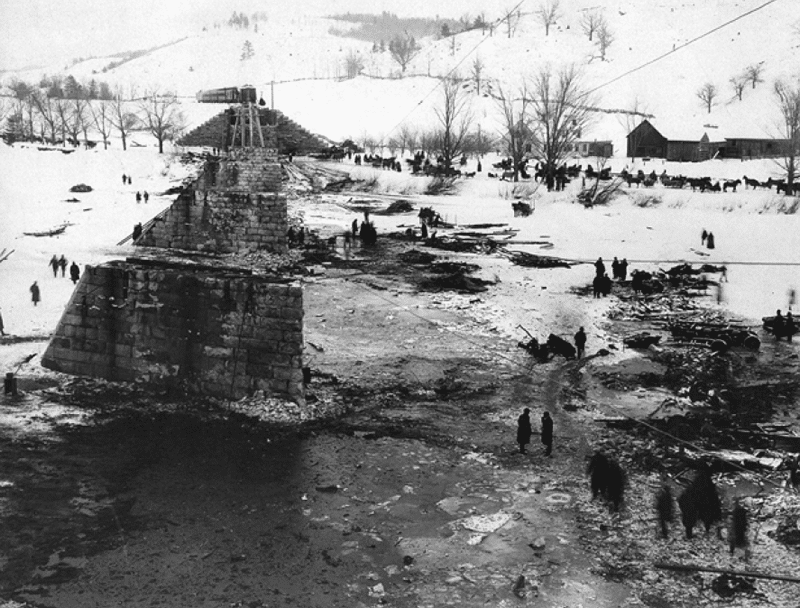
The old wooden bridge was eventually replaced with a steel structure on the original concrete footings. The bridge spans the White River and Route 14 in West Hartford. Tortured souls are said to re-live the gruesome event in perpetuity, a haunting and tragic tale to be sure.
Some say that the area is haunted by ghosts of the hapless victims
It is said that people in nearby Hartford, Vermont often avoid that particular section of road, near the failed trestle, late at night. Probably just as well, since the few who have rallied their courage to venture forth have come back in a near state of shock. Whether it is truly haunted by ghosts or not doesn’t really matter. The memories of the tragedy are certainly haunting enough.
The lingering scent of burning wood, a ghostly railway worker, and a small boy who materializes just above the river (as if standing on the ice), have been just some of the ghostly events encountered. Touching even the hardest souls are the plaintive cries for help, the wailing and screaming, as if those lost that night are reliving the tragedy over and over again, year after year.
A truly haunting scenario doomed to repeat it’s ghostly, tragic origins for years to come.