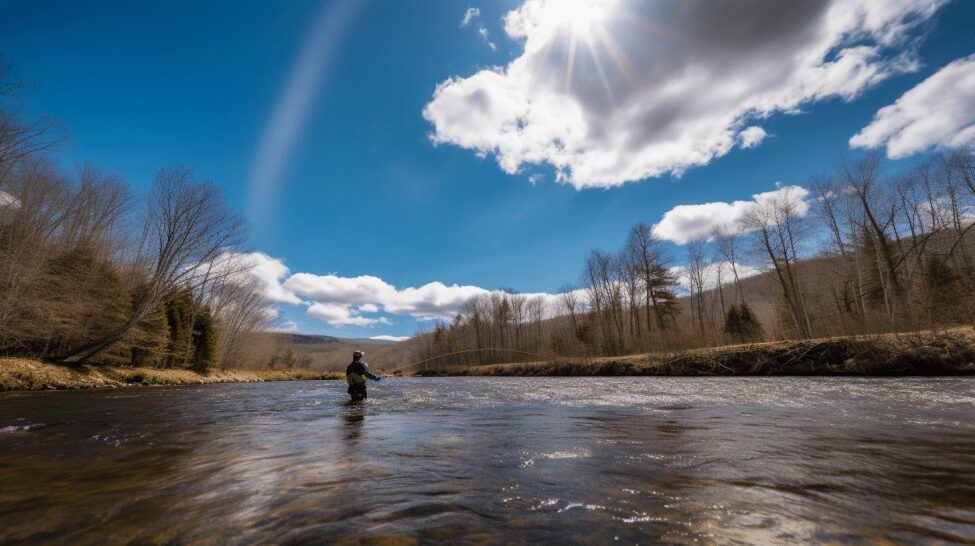
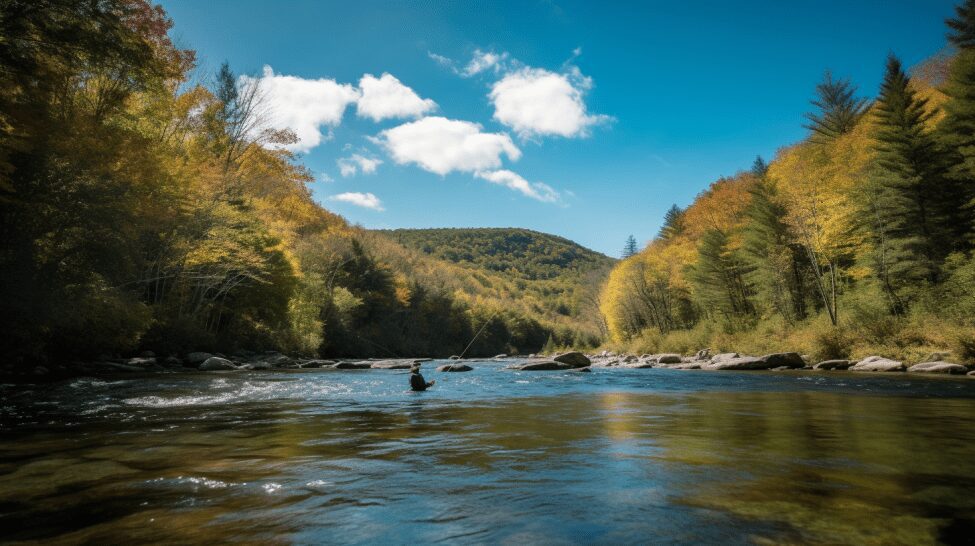
Vermont is a great place for fly fishing! With its abundance of rivers and streams, it's no wonder why so many anglers come from all over the country to experience this amazing state. This guide will provide you with all the information you need to make your fly fishing trip to Vermont a success. We'll cover the best places to fish, the essential gear, techniques for catching trout, tips for avoiding mistakes, and where to get a fishing license. So, grab your rod and reel and get ready to cast your line in the beautiful waters of Vermont!
Best Destinations for Fly Fishing in Vermont
With its abundance of pristine lakes, rivers, and streams, Vermont offers an idyllic setting for anglers seeking a tranquil experience. The Green Mountain State is home to a variety of fishing opportunities, from brook trout in Lake Champlain to the expansive Lake Memphremagog in the north. The Connecticut River is a great spot for smallmouth bass, and the Winooski River is known for its trophy brown trout. Anglers who prefer to fly fish should head to Otter Creek for some of the best fly fishing in New England. Salmon and steelhead can be found in the Missisquoi River, and the Batten Kill is renowned for its trout population. Regardless of the species of fish you’re looking for, Vermont has something to offer every angler. With its secluded, picturesque landscapes, it’s easy to see why the Green Mountain State is a favorite among fly fishers.
Essential Gear for Fly Fishing
You must be equipped with the necessary gear for your fly fishing endeavor in the Green Mountain State. This gear consists of the fly rod, which is a lightweight rod specifically designed for casting and presenting the fly to the fish. Fly reels are also essential for fly fishing, as they allow the line to be reeled in and stored. Fly lines are also necessary, as they carry the leader and tippet that are used to present the fly to the fish. In addition to these components, other essential gear for fly fishing includes waders, a landing net, and polarized glasses for better visibility.
No products found.
In order for the fly fishing experience to be successful, you must also have the right flies and lures. Flies are used to imitate the insects and other food sources that fish feed on, and they come in many different patterns and colors. Lures are often used to draw the attention of fish, and they can be made of metal, plastic, or feathers. Lastly, it is also important to have a fly box to store and organize all of your gear. With the right gear and equipment, you can be sure to have an enjoyable and successful fly fishing experience in Vermont.
Techniques for Catching Trout
To catch trout, you'll need to know the right techniques. Fly fishing for trout is a popular activity in Vermont, and mastering the techniques will help you land a good catch. One technique is to cast upstream and allow the current to carry your fly downstream. This is a great method for fishing in fast-moving rivers. It's important to cast upstream of where you think the trout are so the fly can pass over them without spooking them. When the fly has passed them, you can start to retrieve it by slowly retrieving the line.

- Learn how to cast, retrieve, and how to strike, play, and land trout on spinning equipment
- The excitement comes across as Deitrich describes “watching any fish follow the spinner from the deep water of his hole, twenty-five feet away, all the way to your feet, where he takes the spinner just before it leaves the water
- ” THE how-to book on fishing for trout with spinners shows you how to find and take trout in all four seasons and all weather conditions and what to look for and how much to spend on rods, reels, spinners, and line
- This book is written for the angler who wants to consistently catch large trout over 20 inches
- Whether fishing with regular length fly rod or a specially designed 15’, 17’ or 20’ fly rod or a tenkara-style rod, Don Miller explains in detail the processes and flies that he uses to accomplish his mission
- His 40 years of learning how to catch that rare and elusive large, dominant, heavy-weight trout, that the ones very few fly fishermen ever catch, has been a never-ending pursuit– one that has caused him to endure many sleepless nights pondering: “If I was a large trout needing large meals to sustain life and energy, plus being cautious and wary, where would I reside?” Once I discovered the answers to that question, I concluded that dapping was the only method that would work
- If you apply all the techniques and methods described in this book over time, you too will succeed
- Some you will learn now and others you will learn with experience


- Do you want to catch more trout… On a lake? Fly Fishermen all over the world are discovering the secrets to stillwater fly fishing
- The techniques herein, were learnt in the British Isles and perfected in the Pacific Northwest of the United States of America
- A very short and concise read, this book gets right to the point and teaches you how catch stillwater trout
- If improving your skills is what you wish, or want to learn a new form of fishing for trout, this book does both
- Get prepared for a giant on the end of your line as that is what stillwater fisheries are known for

- The very best tactics and techniques that successful anglers use to get their fish
- With decades of experience on the water, Lamar Underwood knows the best gear, the best times to head out, the best lures to select for certain fish, and the best casts to use for every angling situation
- Now, he wants you to know the tips that he’s picked up from his long experience
- 250 Amazing Fishing Tips is a concise, easy to read collection of the best tested tidbits of fishing wisdom from a lifetime angler
- 250 Amazing Fishing Tips focuses on the most popular freshwater gamefish—trout, bass, crappie, bluegill, walleye, catfish, salmon, and pike—and saltwater favorites, such as striped bass, bluefish, flounder, redfish, weakfish, and sea trout
Another technique is to use a still water approach. This is especially effective in stillwater lakes or ponds. Cast your fly in the direction of where you think the trout are located, and then let it sit for a few seconds. You can then slowly retrieve it and repeat this method. This will help you cover more of the water and gives the trout more time to find your fly. You can also experiment with different types of retrieves and depths to see what works best. With these techniques, you'll be sure to have a successful day of fly fishing in Vermont.
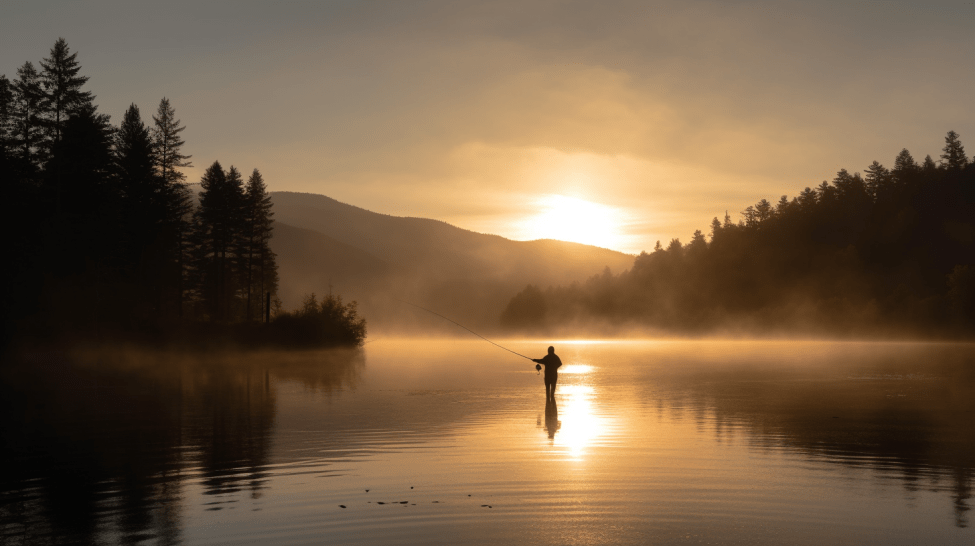
Fly Fishing in Vermont: Tips on Avoiding Common Mistakes
When fly fishing for trout, it's important to be aware of common mistakes in order to ensure a successful day. One of the most common mistakes is not properly setting the hook. When a fish bites, it's important to react quickly with a firm, but not overly aggressive, hook set. If the hook isn't set properly, the trout may be able to shake it off and the angler will miss out on a catch. It's also important not to pull too hard on the line during the hook set, as this can damage the fish's mouth.
Another common mistake is not using the right type of fly. Different species of trout prefer different types of flies, so it's important to research which flies will work best in the specific area. Not using the right type of fly can result in not having any bites. Additionally, it's important to take into account the time of year and the weather when deciding which type of fly to use. The wrong type of fly can lead to a disappointing day on the water.
Where to Get a Fishing License in Vermont
Getting a fishing license is an important part of fly fishing, and acquiring one can be hassle-free and enjoyable. Fishing licenses can be acquired from a variety of sources in the state of Vermont, such as local bait and tackle shops, sporting goods stores, and government offices. The Vermont Fish and Wildlife Department's website is a great source for information on how to obtain a fishing license. Most licenses can be purchased online, making the process even more convenient.
- A field guide to the fish species of Vermont, complete with distribution maps, life histories and photos

- Northern Vermont
- The Lamoille River watershed
- Wade fly-fishing
- A step by step guide to where, how and when
- If you are contemplating getting into the sport and making Northern Vermont your playground, you cannot afford not to have this guide book

- This completely new flyfishing guide to New England is the best flyfishing guide ever on this fishery-rich and historic area
- Author and flyfishing guide Lou Zambello provides all the information to improve your catch rate in Maine, New Hampshire, Vermont and Masschusetts
- Full-color maps accompany the fisheries, complete with GPS coordinates, access points, public land, access roads, boat ramps (including small hand launches), parking areas, named holes and pools and more
- Many flyfishers flock to the same well-known waters that are written about again and again and face crowded conditions
- Yet there are hundreds of productive waters that are ignored
For residents of Vermont, fishing licenses are valid for one year from the date of purchase. For non-residents, there are a variety of short-term and multi-day licenses available, depending on the type of fishing they intend to do. If you are unsure of the regulations and the type of license you need, the Vermont Fish and Wildlife Department can provide helpful guidance. It is always important to check the regulations to make sure you are following the rules and regulations of the state when fishing.
Frequently Asked Questions
What is the best time of year to go fly fishing in Vermont?
Fly fishing in Vermont is best suited for the warmer months of the year, typically from late spring through early fall. The combination of rising water temperatures and increased insect activity make these months the most productive for anglers. Summer is especially popular, as the extended daylight hours make it easier to stay out on the water for longer periods of time. However, experienced anglers know that the cooler months of the year can still be productive and often provide a more peaceful and private experience.
How much does it cost to rent fly fishing equipment in Vermont?
Fly fishing in Vermont can be a great experience, but it can also be expensive. Renting fly fishing equipment can be costly, with prices ranging from $20 to $50 per day. The cost of renting equipment can vary depending on the type of gear you need and the length of your rental. It's important to do your research and shop around to find the best deal.
Is it possible to go fly fishing in Vermont without a fishing license?
Fly fishing in Vermont does require a fishing license for all anglers age 15 or older. Non-residents and residents are required to have a valid license to legally fish any water in Vermont. That being said, there are a few exceptions. For example, if you are fishing on a licensed fishing preserve, a license is not required. Additionally, any person under 15 years of age who is accompanied by a properly licensed adult may fish without a license.
What type of clothing should I wear while fly fishing in Vermont?
When going fly fishing in Vermont, it is important to wear clothing that will keep you warm and dry. Layering is key, so opt for a combination of a wicking base layer such as a long-sleeved shirt, a mid-layer such as a fleece or wool sweater, and a waterproof outer layer such as a rain jacket. You'll also want to wear a hat, gloves, and waterproof boots to protect yourself from the elements. Additionally, bright colors are a good idea to make sure you stay visible, as well as to help you spot fish in the water.

- LIGHTWEIGHT CONSTRUCTION to hold all your essential trout fishing gear, combining the breathability of mesh with the durability of 100% recycled ripstop polyester
- EIGHT POCKETS, four zipper and four Hook and Loop, with plenty of capacity for your fishing essentials and fly tying tools
- TWO FLY-DRYING PATCHES placed high up on the chest for safekeeping and easy accessibility
- RUBBERIZED TABS FOR TOOL DOCKING to keep your fishing pliers and forceps handy
- ELASTIC LOOPS FOR EASY TIPPET BAR ATTACHMENT with elastic loops that hold your spools front and center within easy reach

- Chest and waist high convertible with waist-mounted ease-lock suspenders
- Elastic adjustable suspenders for maximum comfort; Adjustable, 2-inch wide belt with quick-release buckle and utility loops for gear attachment
- Large chest storage pocket with YKK waterproof zipper closure; Reach-through fleece hand warmer pocket with YKK waterproof zippers; Interior chest zippered pocket flips out for easy access; Velcro on chest to attach a fly patch (not included)
- Articulated knee; Self-fabric gravel guard with gathered elastic bottom hem; Anatomically engineered rubber boot feet
- Every pair of waders is tank tested for maximum performance – Designed to protect itself from water in the sea, in lakes, rivers, marshes; Repair kit is included

- 7 Total Pockets: Dual right leg fishing tackle pockets lined with wear-resistant oxford, allowing tools such as pliers, scissors, knives.(These tools are not included in the package). 2 slash hand pockets, 2 rear large zipper pockets, 1 left leg large zipper cargo pocket, keep your essentials safe and quickly accessible.
- Water Repellent: The fishing shorts' fabric is treated to resist water, keeping you dry and agile, and it repels moisture and dries quickly—avoiding stains and keeping you clean
- Performance Fishing Shorts:Designed to block UV rays, these fishing shorts are made of MythCool fabric with UPS50+ sun protection, and offer reliable sun protection, helping to prevent sunburn during long hours and keeping you cool.Mythcool technology creates a strong cooling effect when sweating, it's cooler than most shorts you've ever worn.
- Flexible & Breathable: The light and breathable shorts with gusseted crotch promote airflow, ensuring you stay cool and comfortable in hot and humid weather.Elastic waistband with tabs brings you flexibility and style.
- Multi-Purpose Fishing Short:These versatile shorts are well-suited for a wide range of activities, from casual strolls to active outdoor sports like fishing, hiking, jogging, hunting, travelling, camping,ect. great for inshore, offshore, freshwater, and saltwater fishing, fly fishing and lure fishing. A great gift for fisherman, angler or anyone who loves cargo items
Are there any regulations regarding the size of fish I can catch in Vermont?
When fly fishing in Vermont, it is important to know and follow the regulations regarding the size of fish you can catch. Generally, trout and salmon must measure at least 15 inches before they can be legally caught. Other species, such as bass, need to be at least 12 inches. If you catch a fish that is below these sizes, you must return it back to the water unharmed. It is important to be aware of these regulations, as there are hefty fines for anyone who is found to be breaking them.
Conclusion
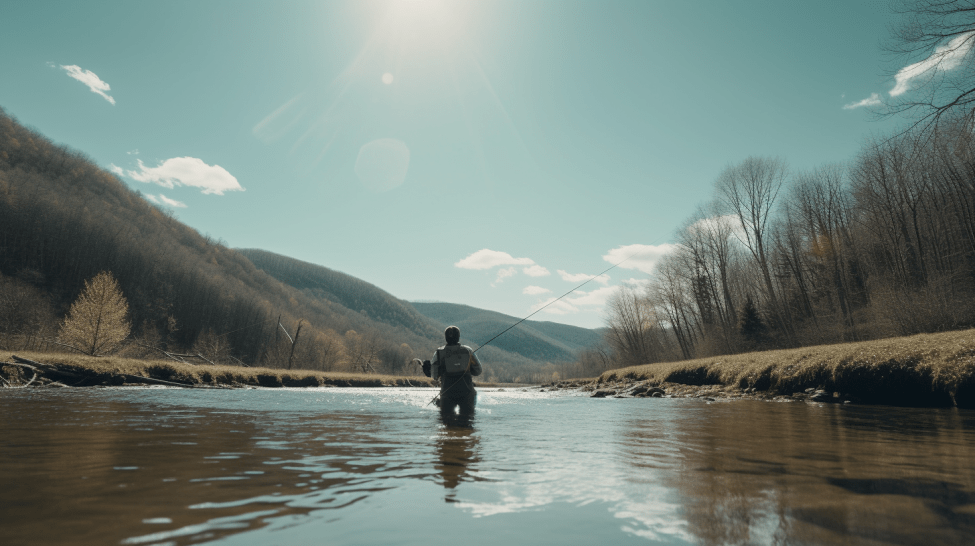
Fly fishing in Vermont is an exciting and rewarding experience. With the right gear, knowledge, and techniques, you can have a successful fishing trip in Vermont. When you’re out on the water, remember to be mindful of the environment and be respectful of the fish and other wildlife. Also, make sure to get the proper fishing licenses before hitting the water. Don’t forget to have fun and enjoy the beauty of Vermont from the river banks. With the right preparation and knowledge, you can have an unforgettable fly fishing experience in Vermont.
Thank you for visiting Vermonter.com! Please subscribe to our email list for the latest articles!